Cognitive Orgies
“Echoes of Earth”
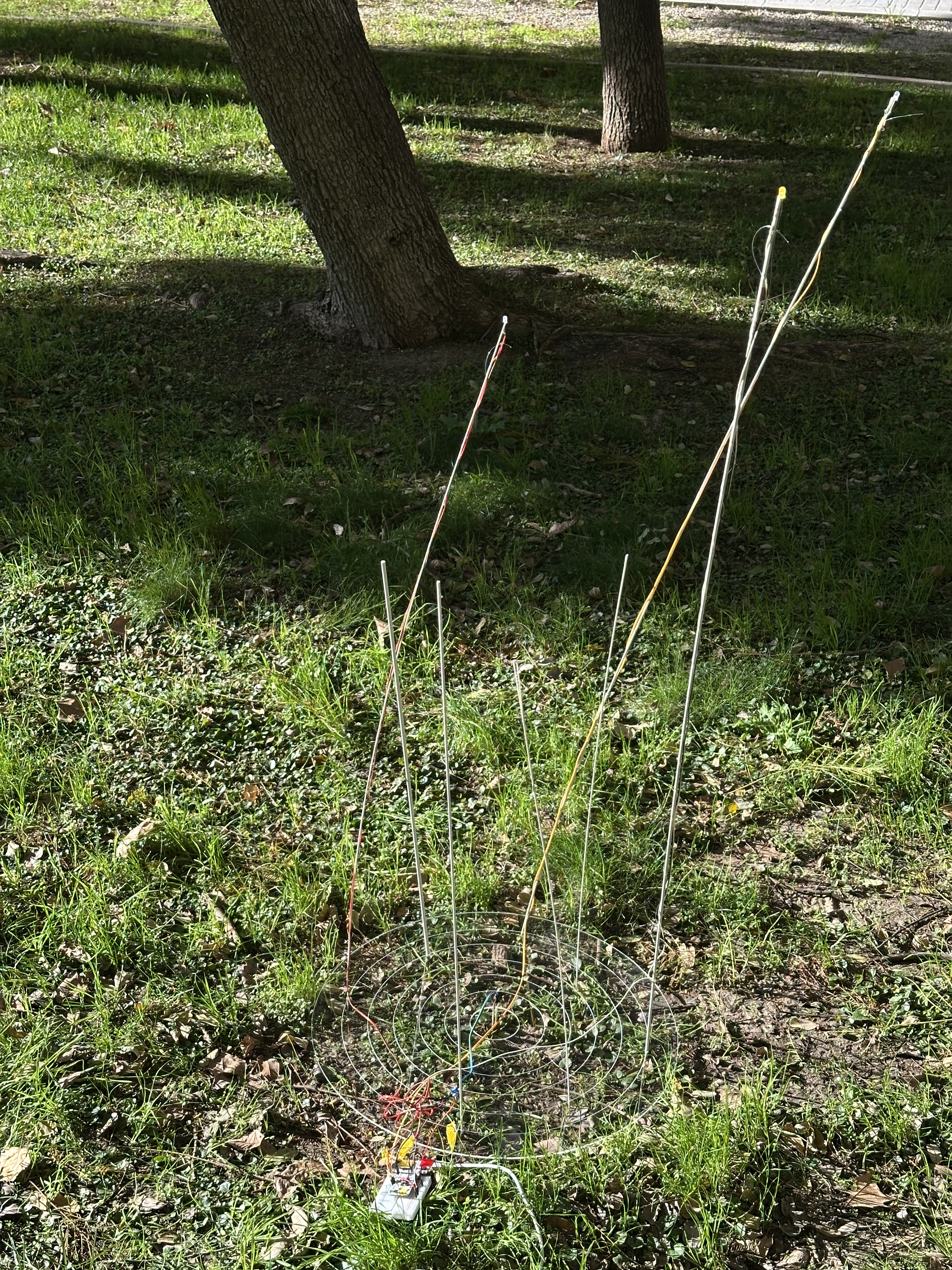
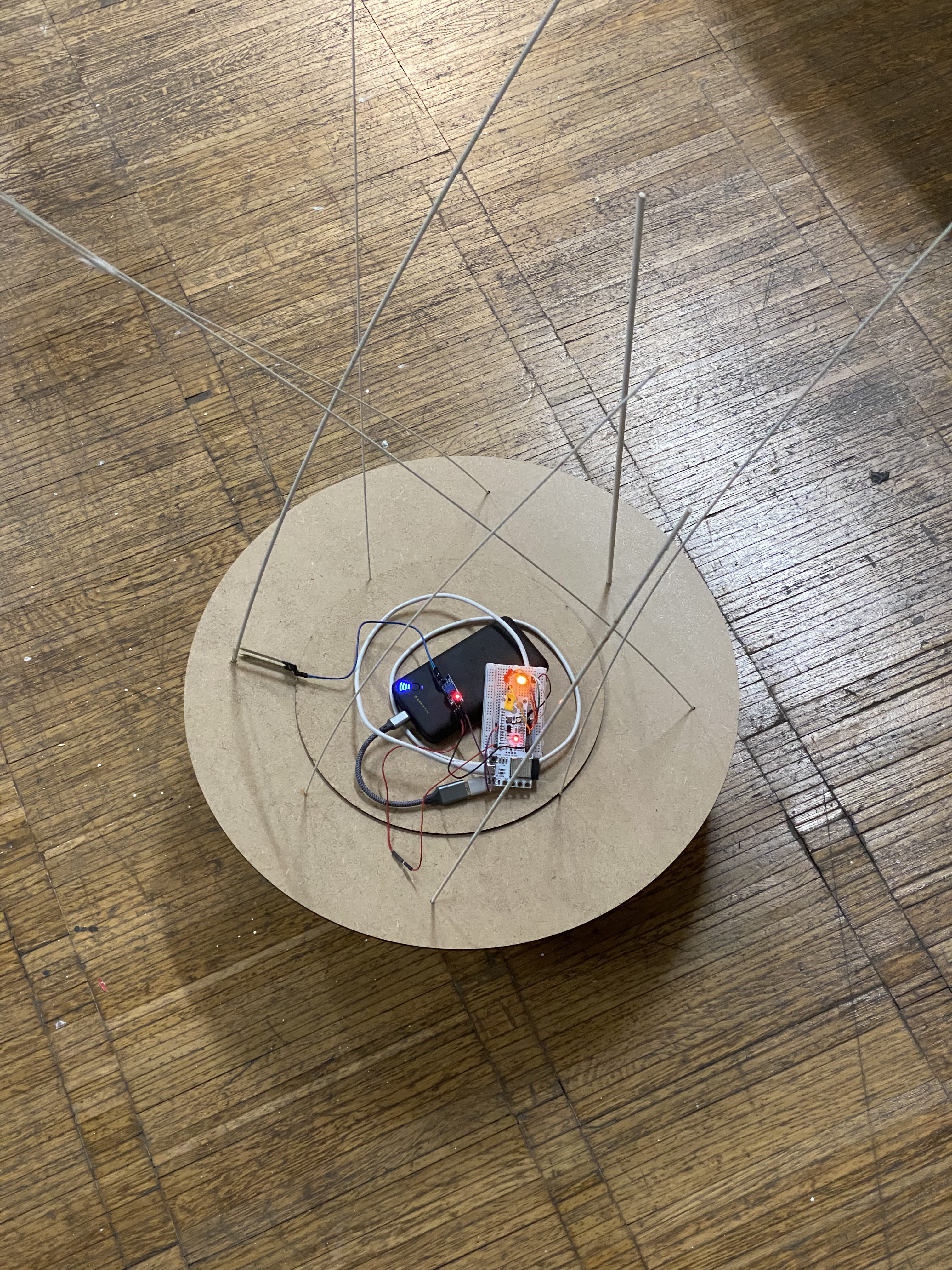
Emerging from an initial desire to visualize underground tree roots and evolving into a sensory portal to foster deep connection with the planet, Echoes of Earth is a soil sensing device that reads ground data and transforms it into light and sound outputs through remote communications. Mimicking the fireflies that fly in open fields, the sensing device reflects the soil moisture levels and activates the light situated on top of the reed-like structure to communicate what is being sensed in the ground. Intended to be placed outside in fields between the trees, the device invites people passing to stop, look and realize: there is always activity happening in the underground Earth and it is calling out to you. As an additional layer, the device communicates the data remotely to a screen, creating a root-like structure that emits a sound resembling echoes and visceral calls. The visual is of a living breathing root that speaks to you wherever you are.
Process, Evolution & Traces
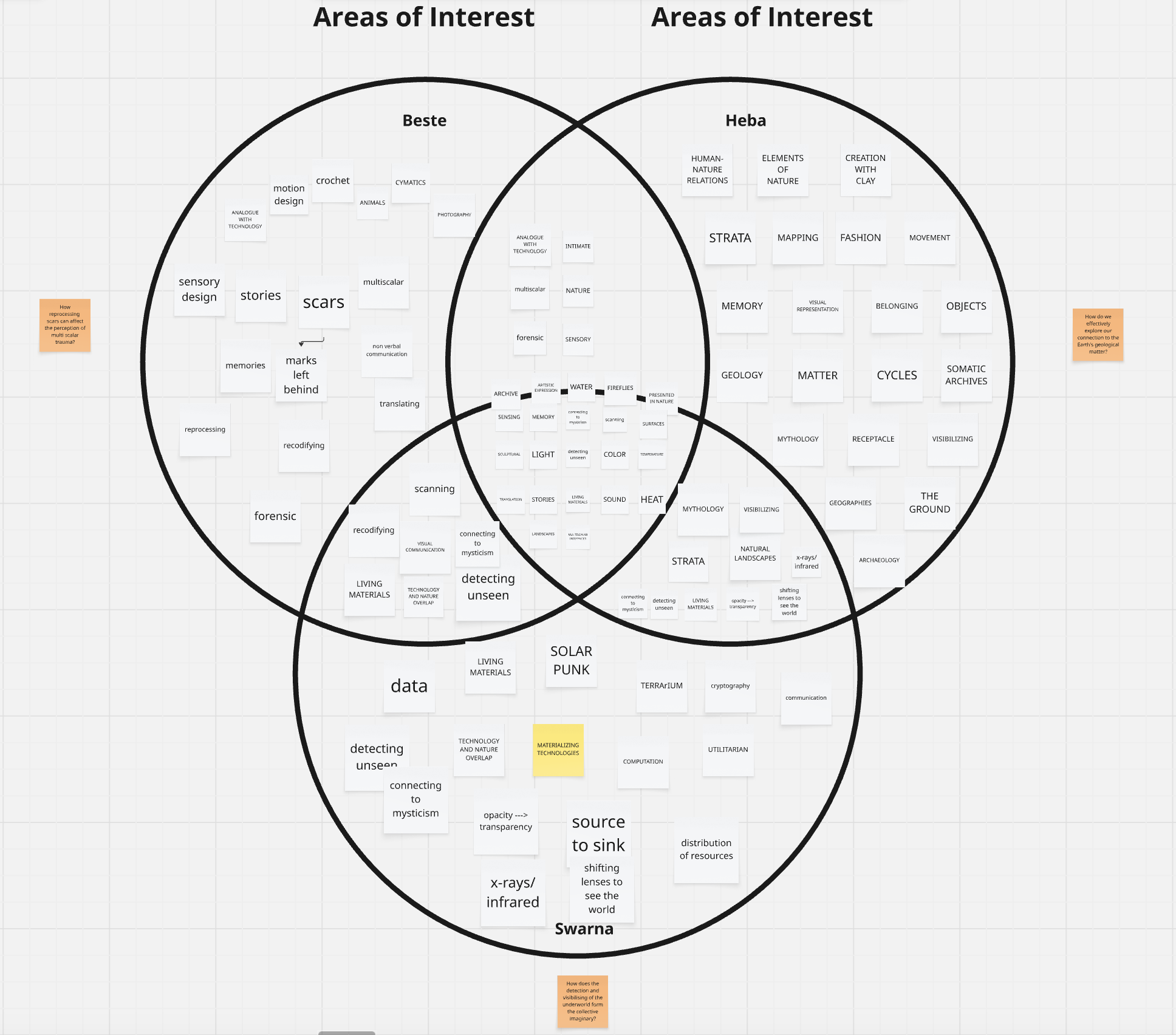
The first brainstorming session was interesting and a good head start for the upcoming week. Upon mapping out our individual interests and discussing similarities, we realized we had several overlapping areas of interest. Sensing, translation, surfaces, light and ground were some of the common words that emerged from the intersection of our interests. Interestingly enough, one of the strongest ideas that emerged from these initial discussions was fireflies. After doing some research, we learnt that fireflies are bioindicators that reflect the overall health of an ecosystem through their presence, absence and behavior. This particular idea invoked some sort of excitement in us and I left feeling that we had a clear idea to kick off the micro-challenge with.
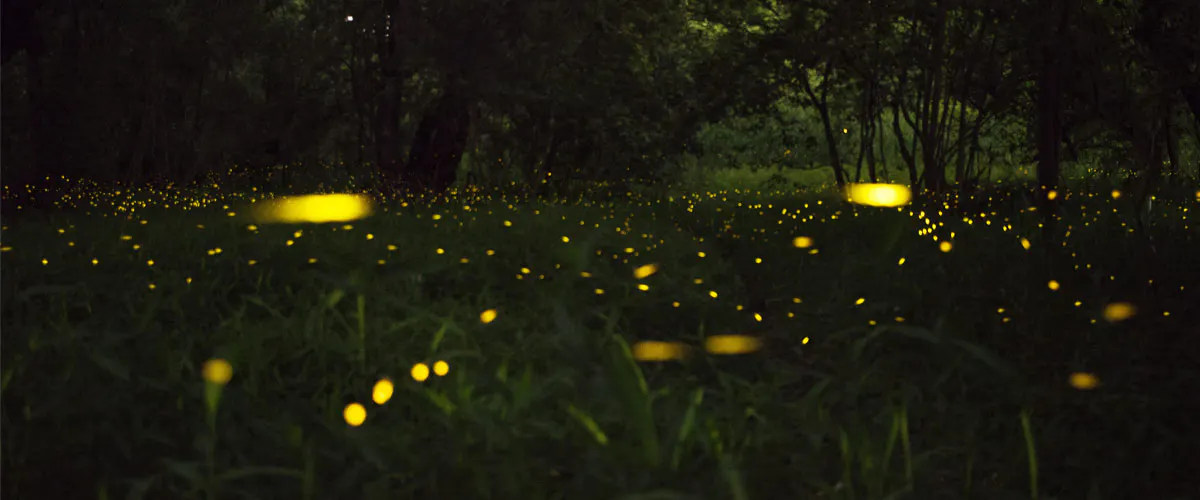
When we resumed the ideation process on the first day of the challenge week, we picked up where we left off but the discussion started to shift a little bit, which is part of the process. A first cognitive challenge and a struggle for us as a group was trying to bridge the connection between the fireflies concept and our design research areas to justify the ‘why’ question. By the end of the ideation session on the first day, we arrived at something slightly different: a scanner of multi-scalar interfaces that reads multiple inputs such as temperature, sound (possibly more) and translates it into multiple outputs – light, color, sound (possibly more). The intention was for it to read ground matter, both the underground world linked to Swarna’s research and geological matter connecting to my research, as well as human scars, to link to Beste’s research. It wasn’t until we presented the concept and were confronted by a number of questions that we didn’t have clear answers to that we realized the concept was lacking clarity. In an attempt to make it adaptable and moldable to each of our research projects, we left it too open ended. In all honestly, from this moment forward we struggled to gain clarity on exactly what it is we were trying to do and felt stuck in a constant loop of discussions and doubts. I also personally struggled to completely let go of the idea of the fireflies and the lights because it felt like the point we all strongly connected to and my intuition told me it was our strongest point.
Technical Execution
Whilst discussing task divisions and strategies for prototyping, we found ourselves struggling to fully define the project, which I for one did not want to have to discuss with anyone until there was a clear direction. Here is where I learnt something else: discussing with others helped us understand our limitations and our avenues of possibility. After explaining our desire to map underground roots to Santi & the team, we realized the limitations. This is not something we could construct with the time and tools we had available. Suggestions to read alternative ground data like soil conductivity and manipulate that information to say we were mapping roots seemed ethically wrong and dishonest. After discussing it amongst each other and evaluating our main intention to build a connection to the ground, we agreed to look at it through another lens: a translation of a different form of ground data into a visualizations of the roots. Soil moisture levels are in fact a direct indicator of the underground environment where tree roots function. Much like fireflies, they reflect the health of the root’s environment. Ultimately, this is the moment where we rewrote the question: rather than mapping underground root paths, what if we monitor their health?
Based on our strengths, Beste took on the visualization development, I worked on the design and build of the physical artifact and Swarna smoothly bridged between the physical inputs and the digital outputs through sensors, coding and connections. Even though we were all responsible for one part, we worked together seamlessly through many of the tasks to bridge any gaps and amplify our strengths.
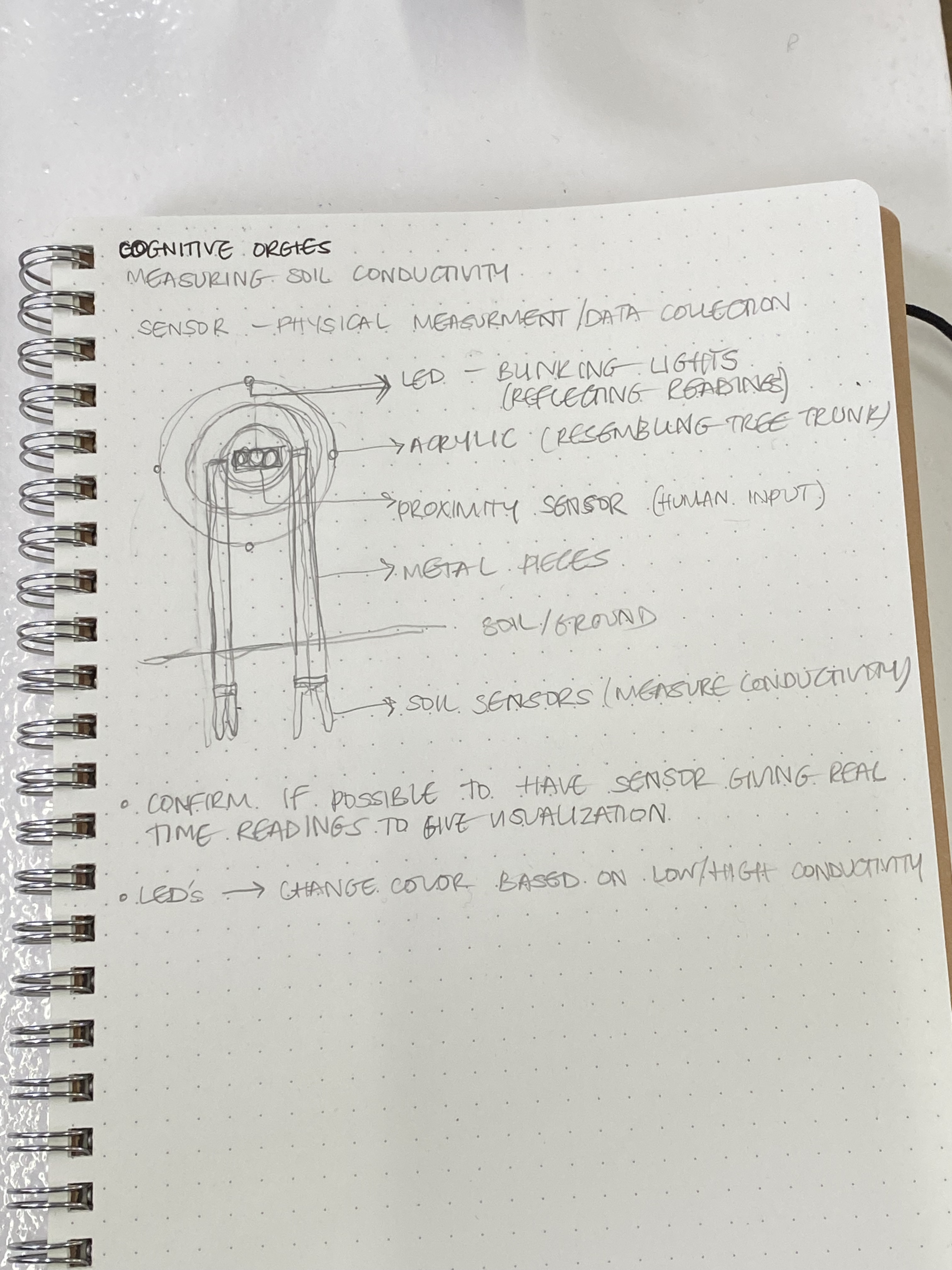
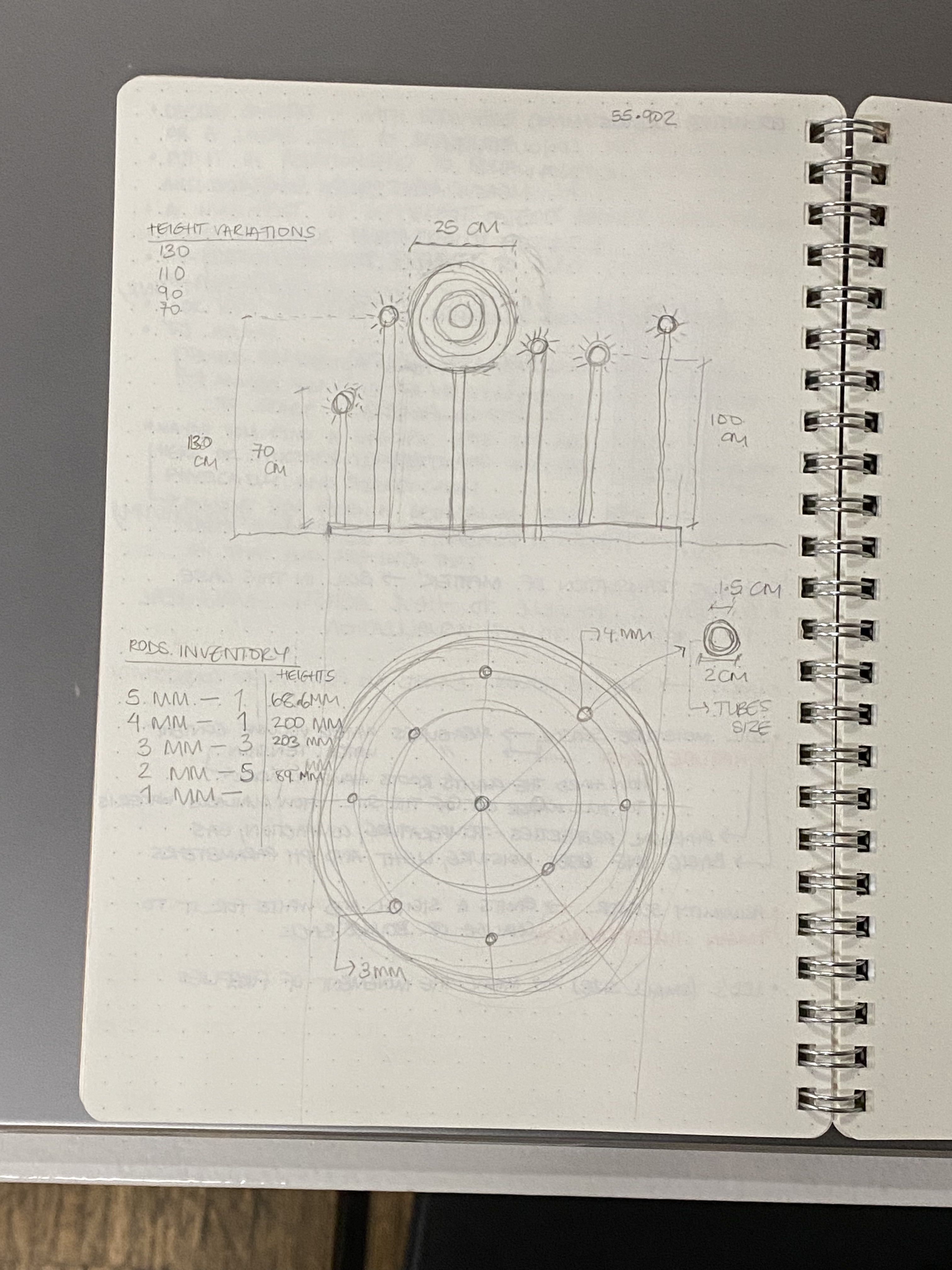
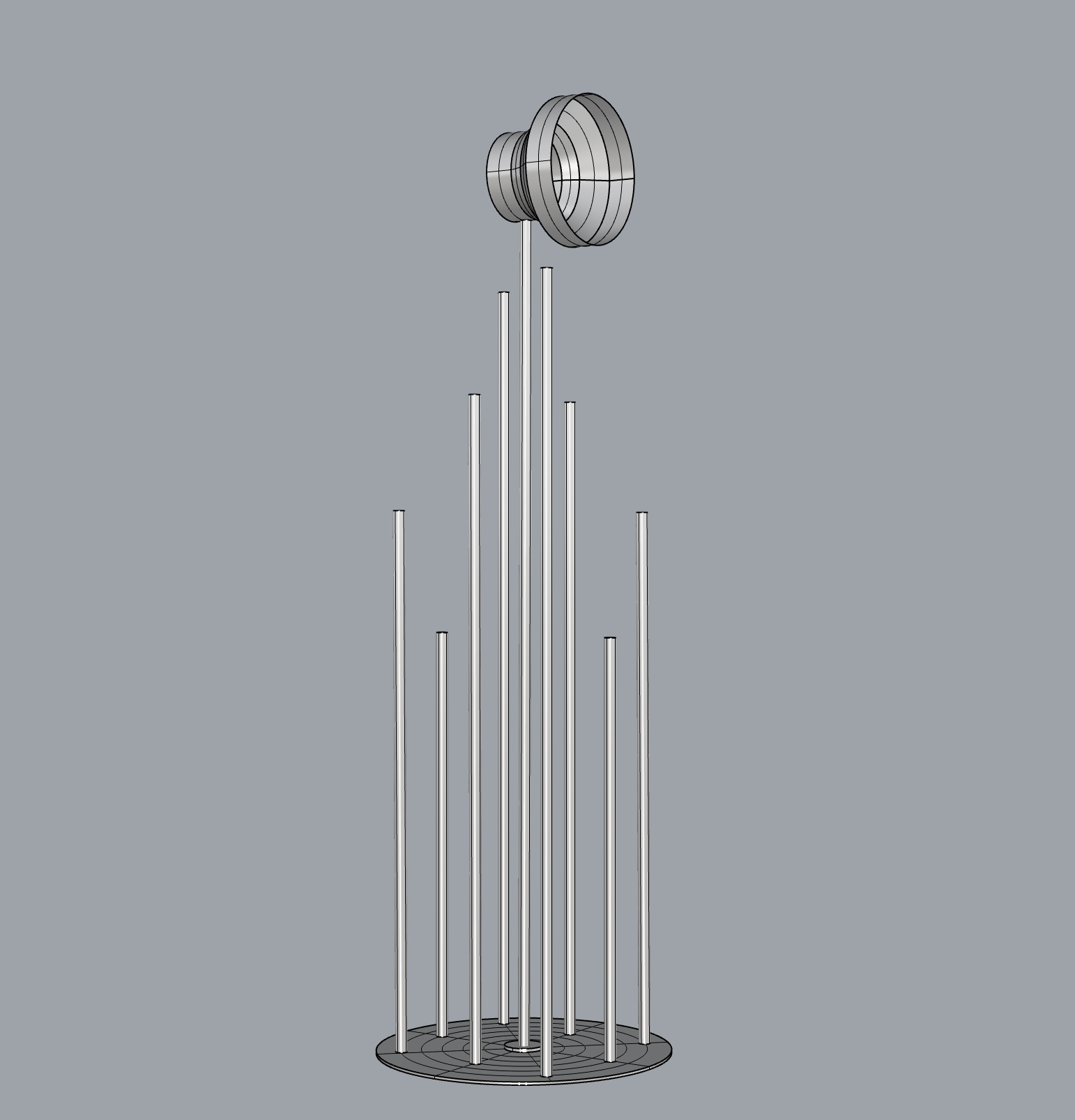
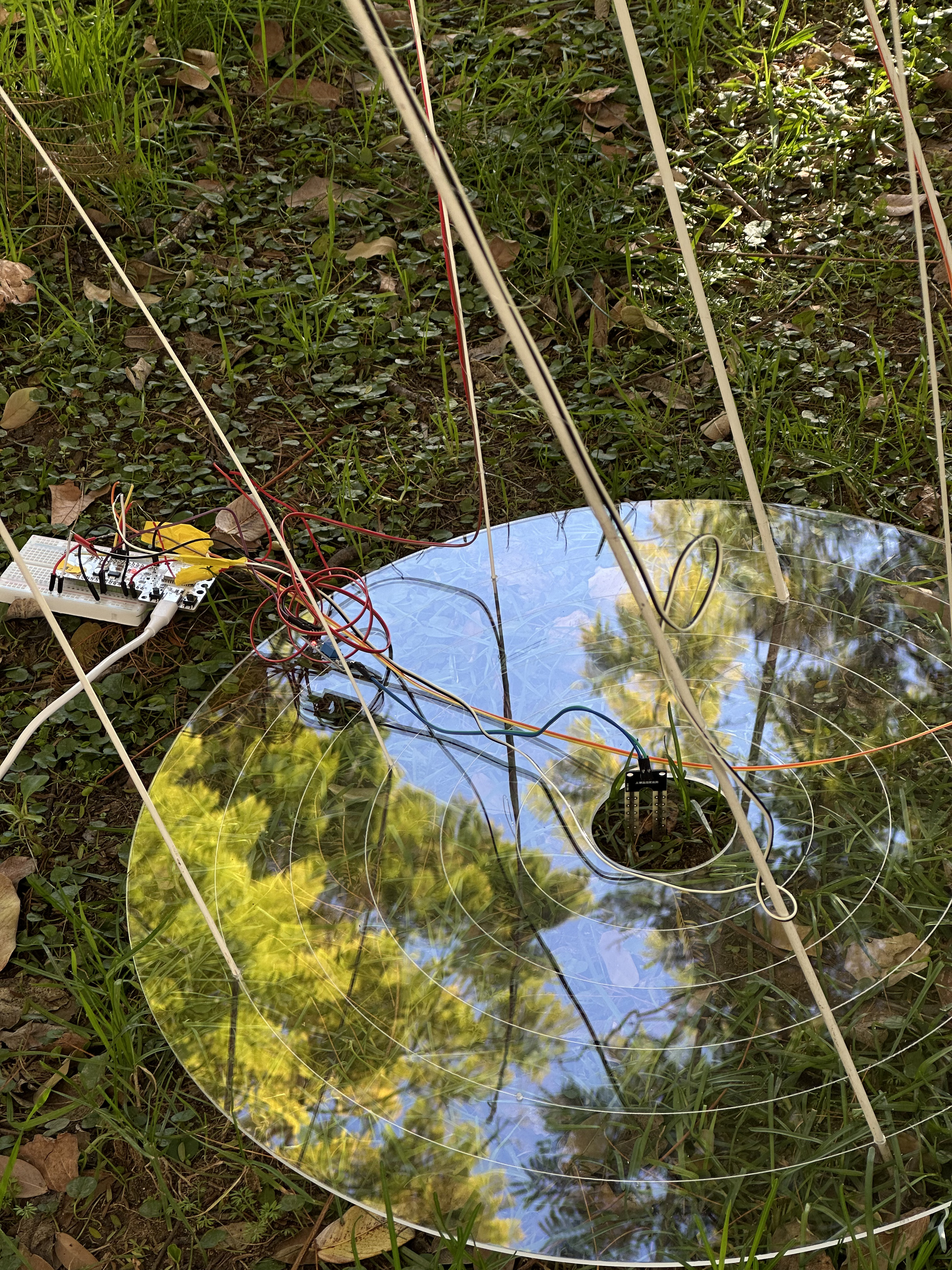
One thing I enjoyed dabbling with was setting up the soil moisture sensor. Electronics and coding is not friendly territory for me, but I wanted to tackle that head on. Through initial online research and some help from Andres, I was able to get the moisture sensor working and ready to test in different soils. This was a huge accomplishment for me.
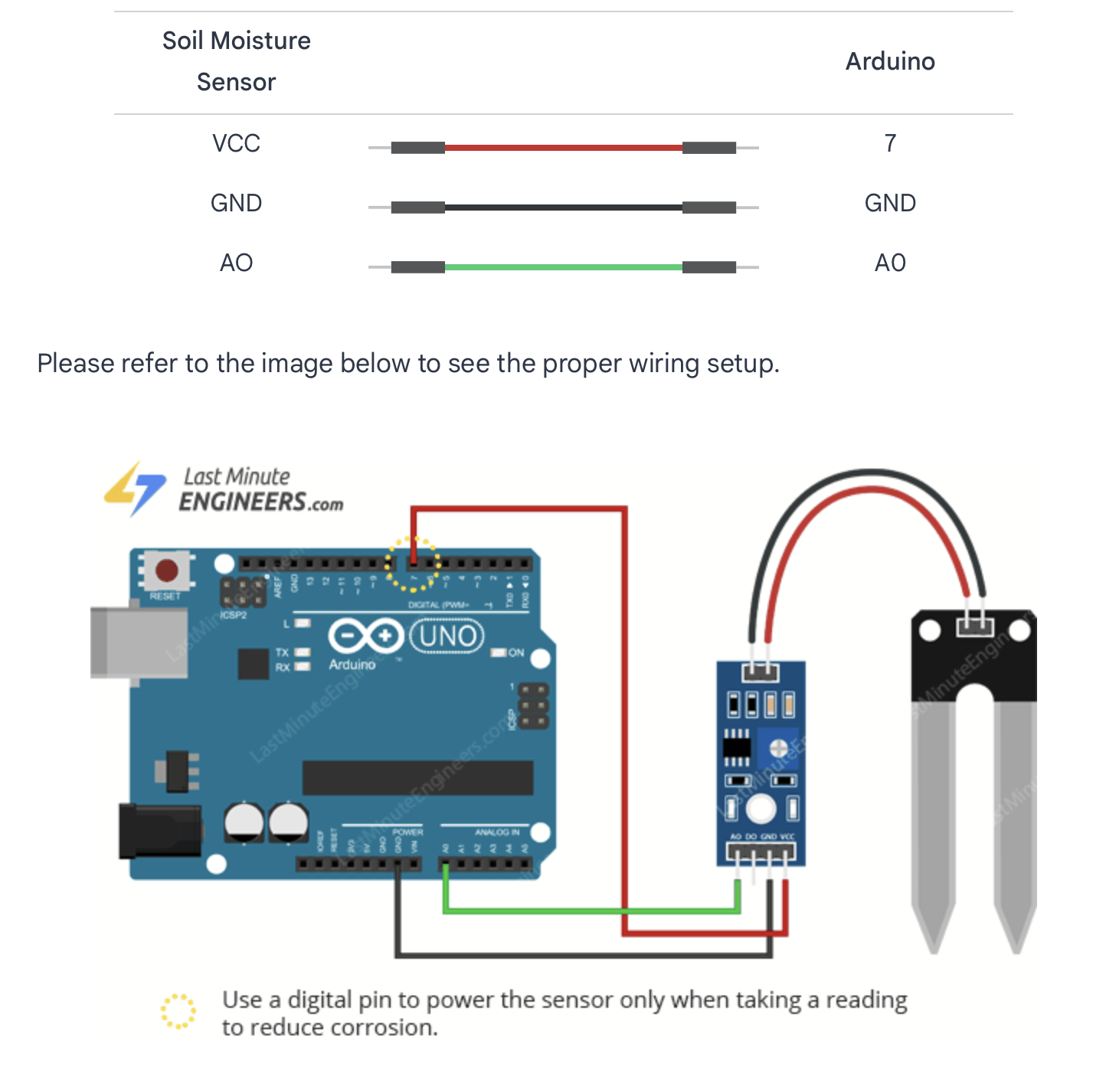
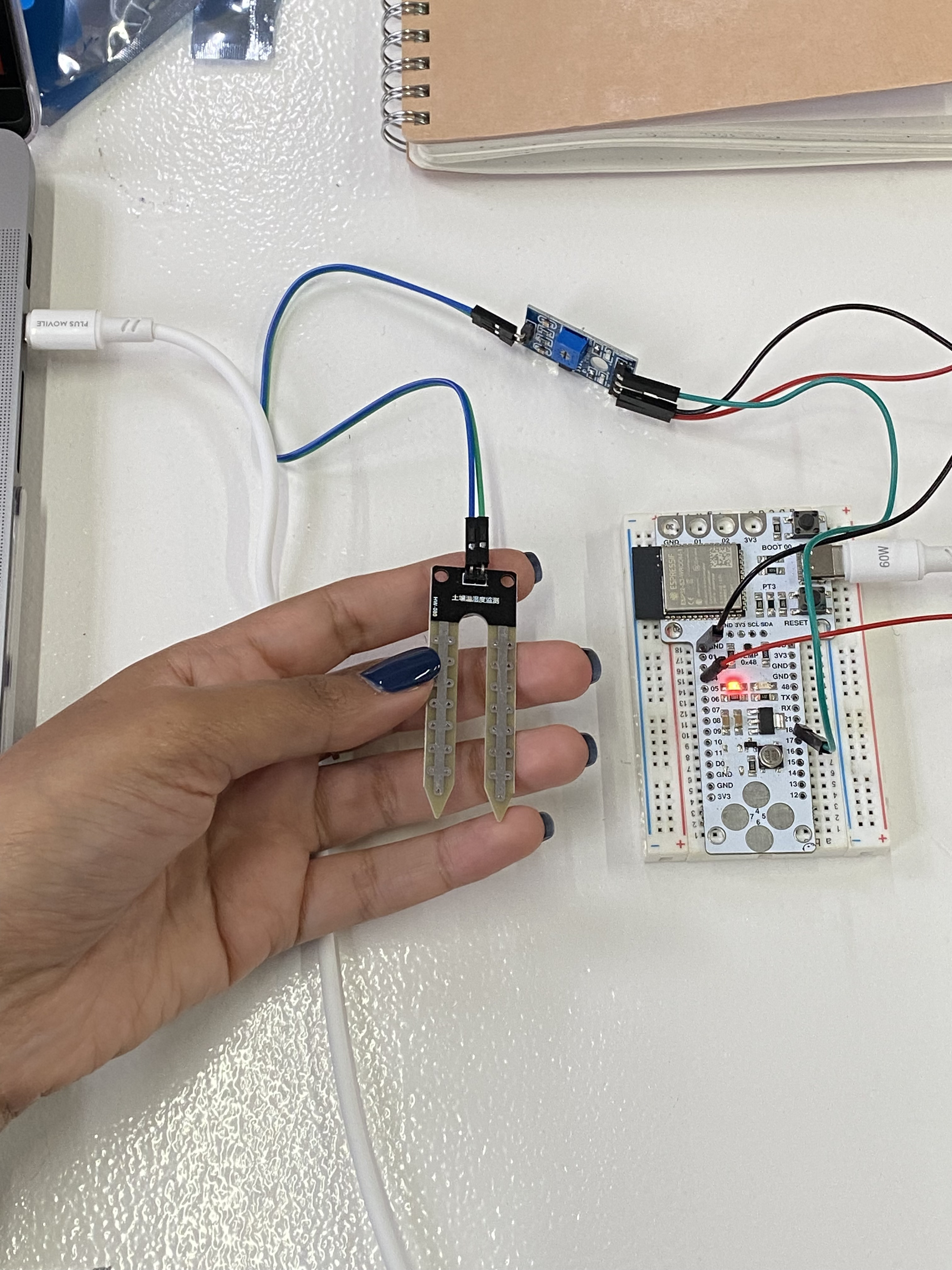
Aside from a few questions about if things were set up correctly, I hardly used artificial intelligence throughout this whole experience, which only felt right since we’re talking about connecting to the Earth. From there, I handed it over to Swarna and she worked her magic with the coding.
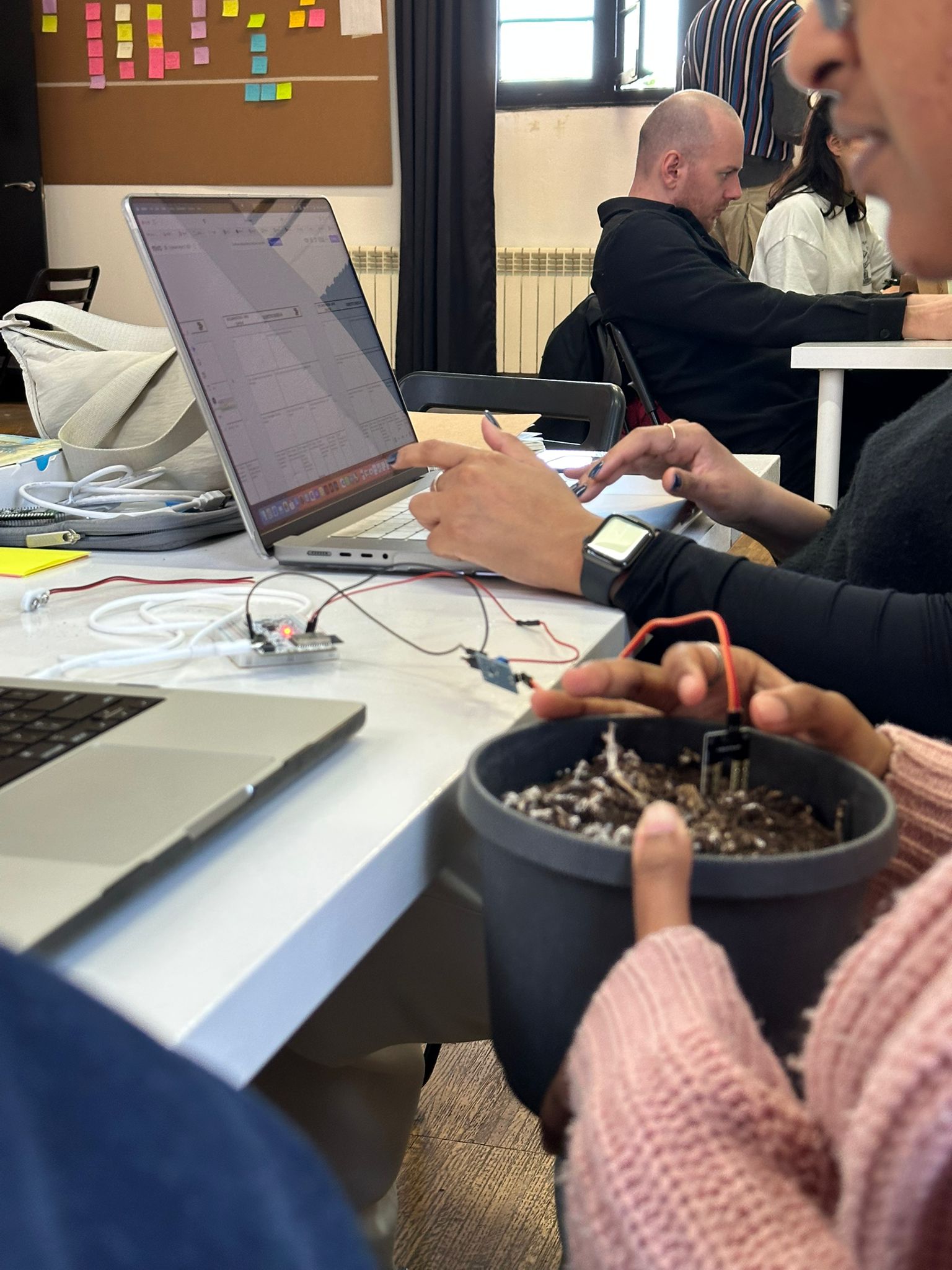
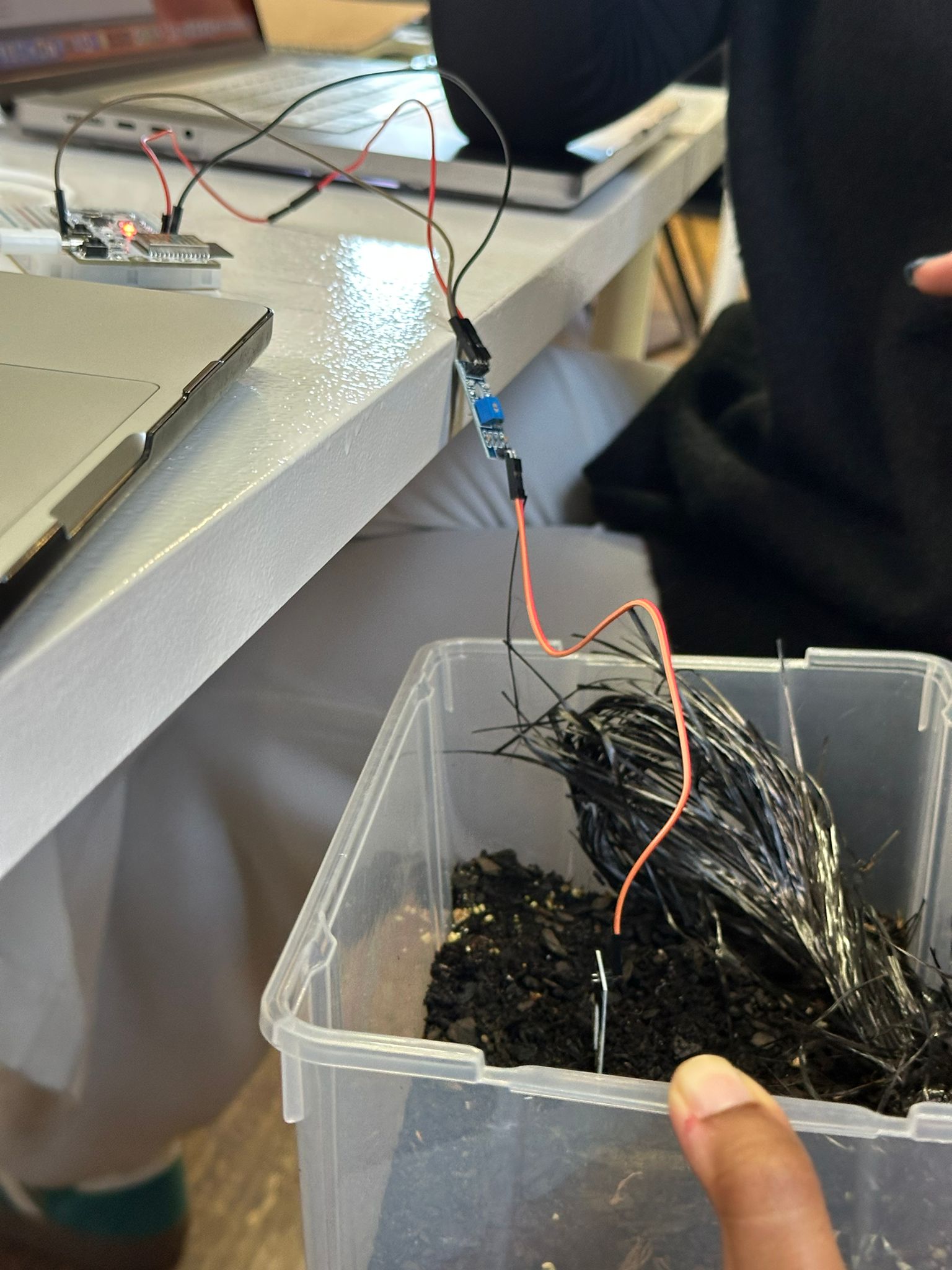
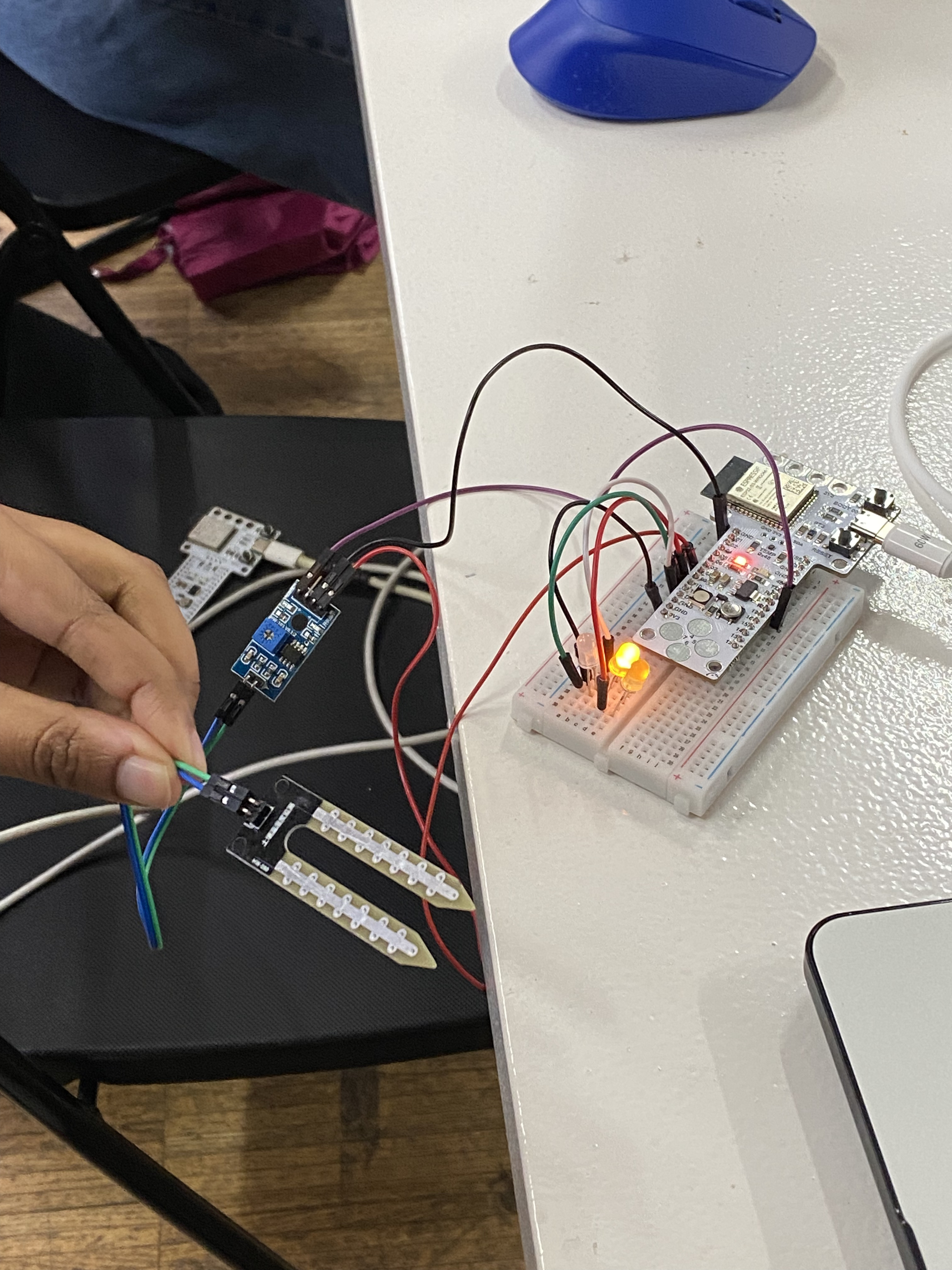
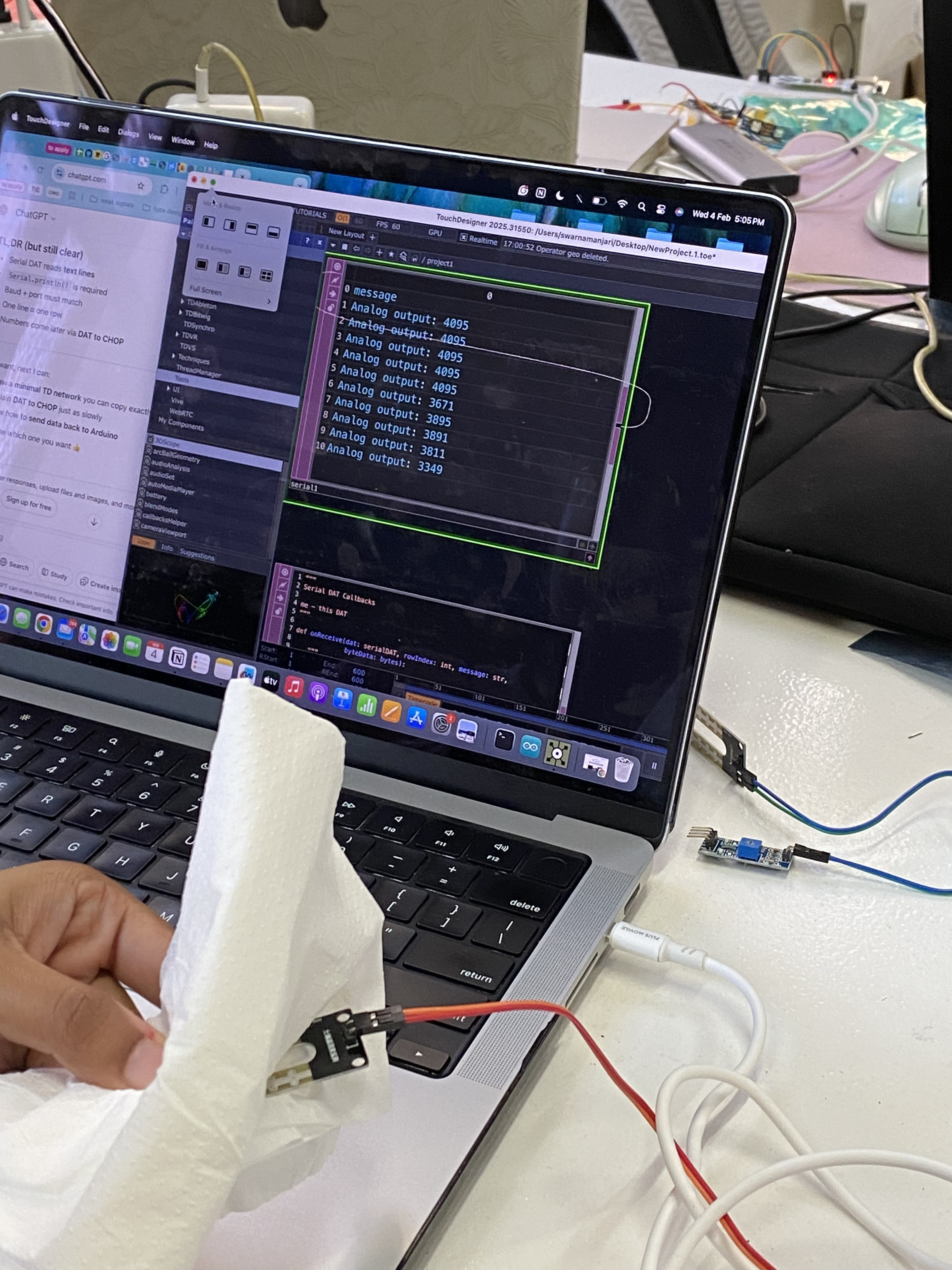
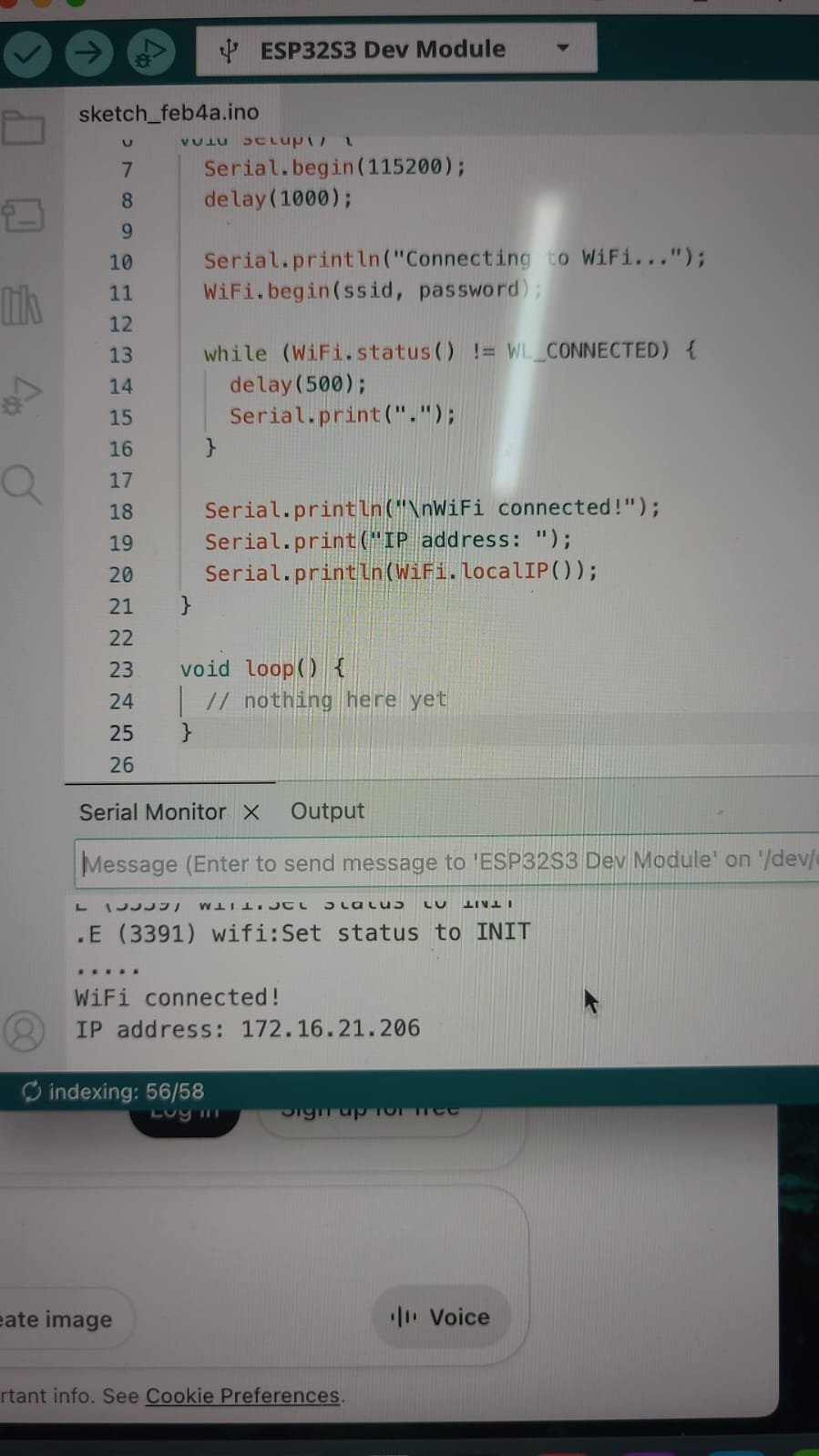
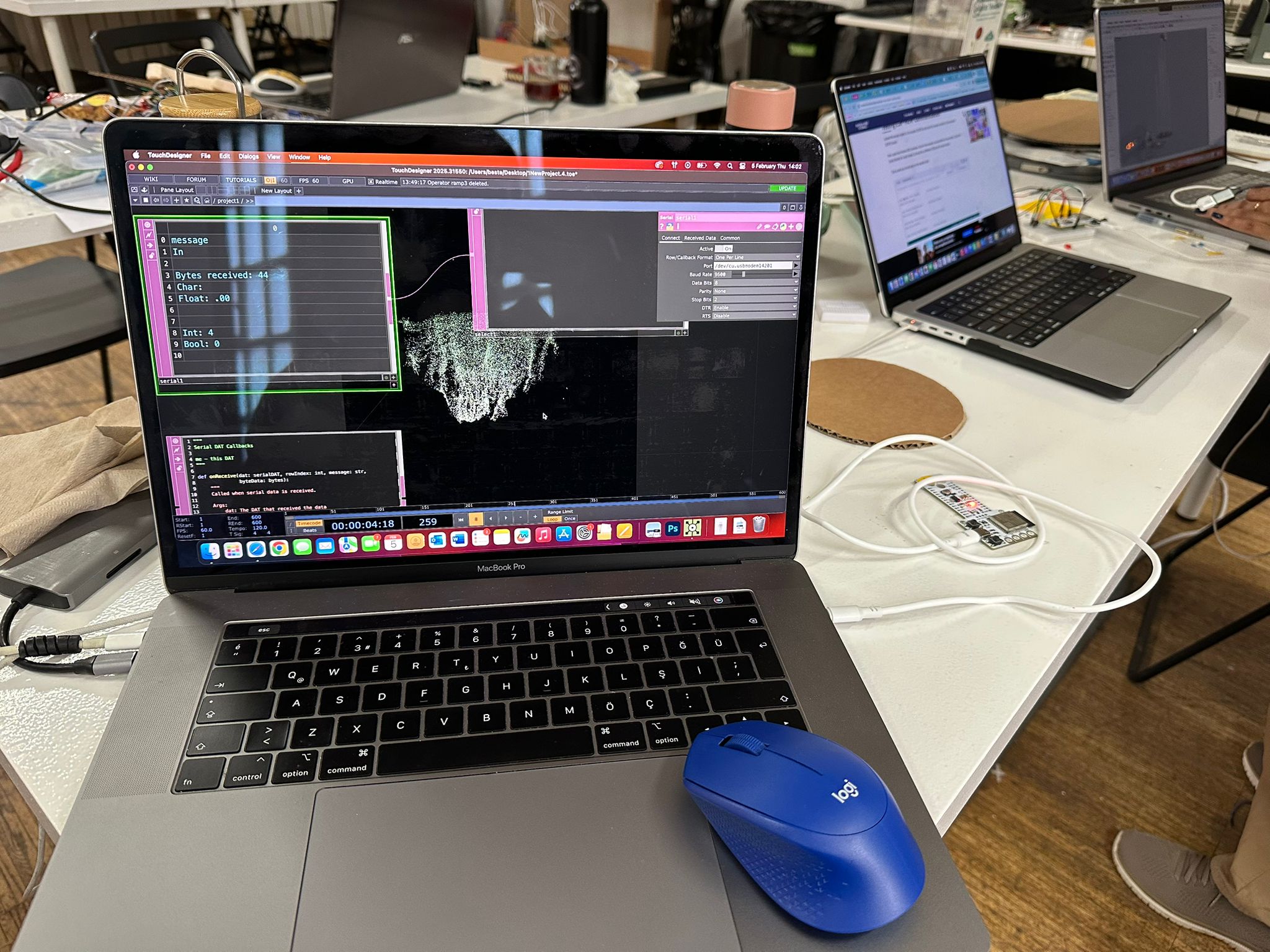
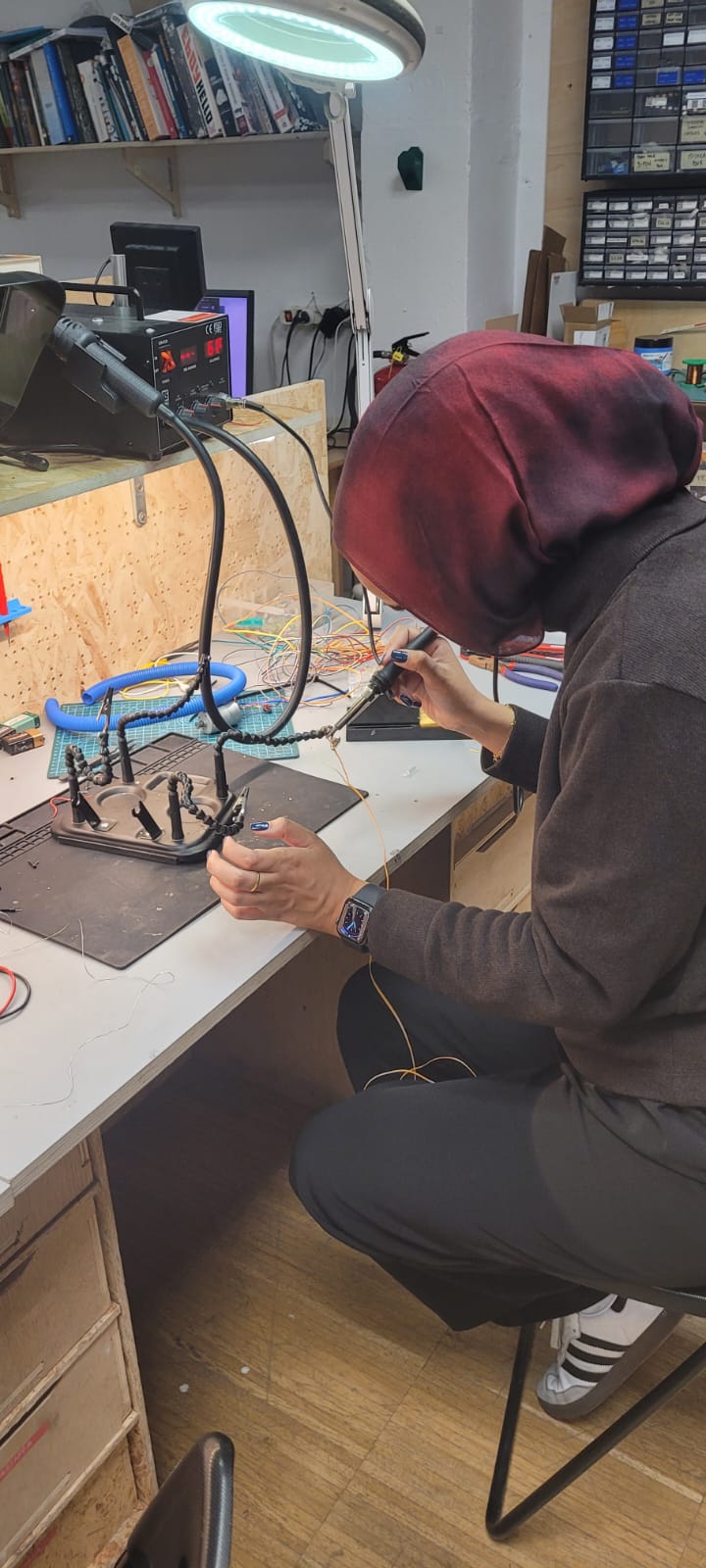
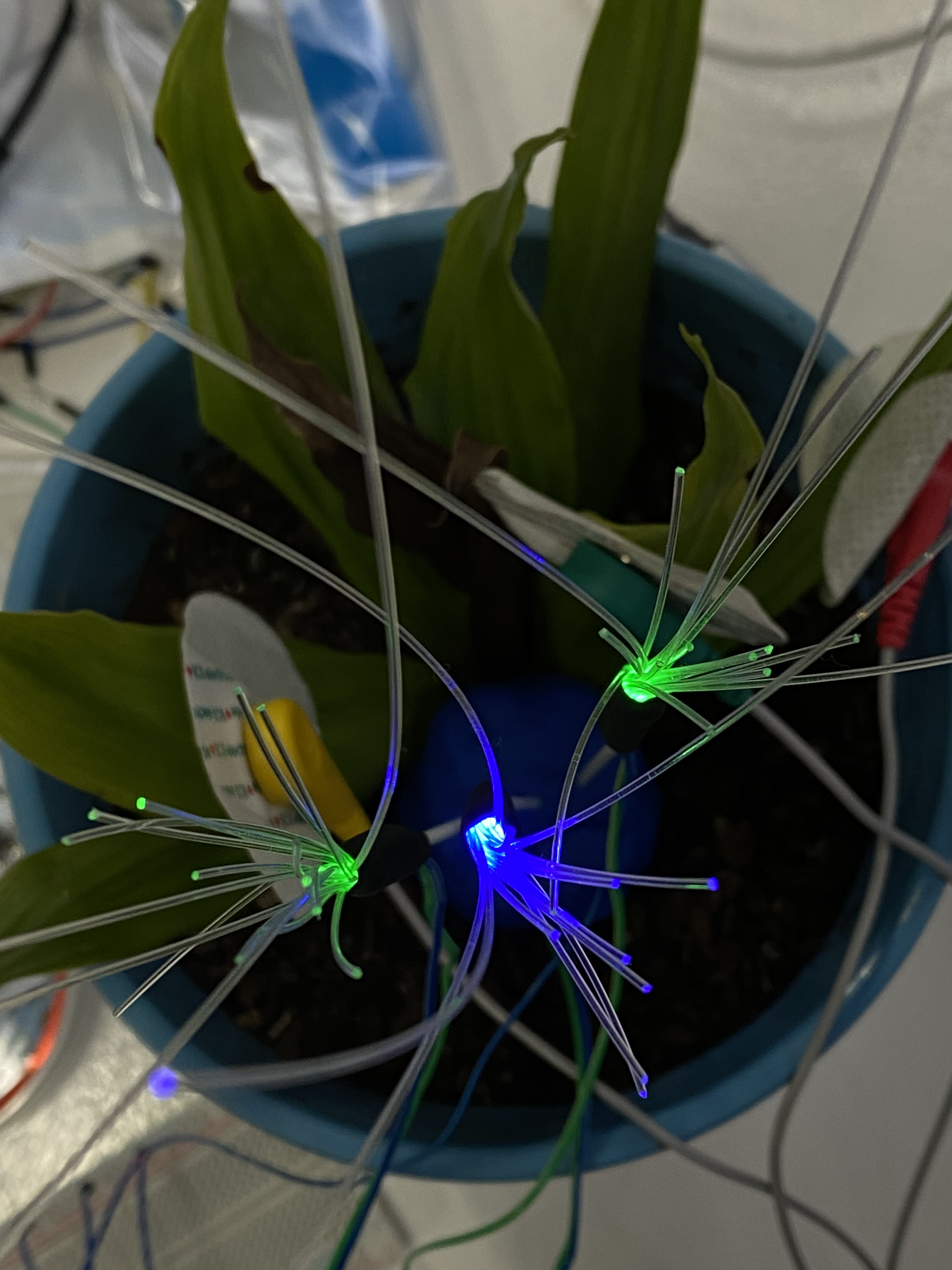
We got a lot of help from Mikel to get the lights set up - we played a lot with the way the LED’s would react to the soil moisture readings and also the connections to the Barduino board from the top of the reed-like structures. Since the connections were quite flimsy, we had to solder cable connectors to the LED wires that connect to the Barduino board . We also used clear wires to tighten the electrical wires to the reeds to keep them stable for the presentation. Through the support from the FabLab team, we were able to break through both the mental and physical blocks. Thank you Santi, Mikel, Andres, Julia, Damian.
Finalmente
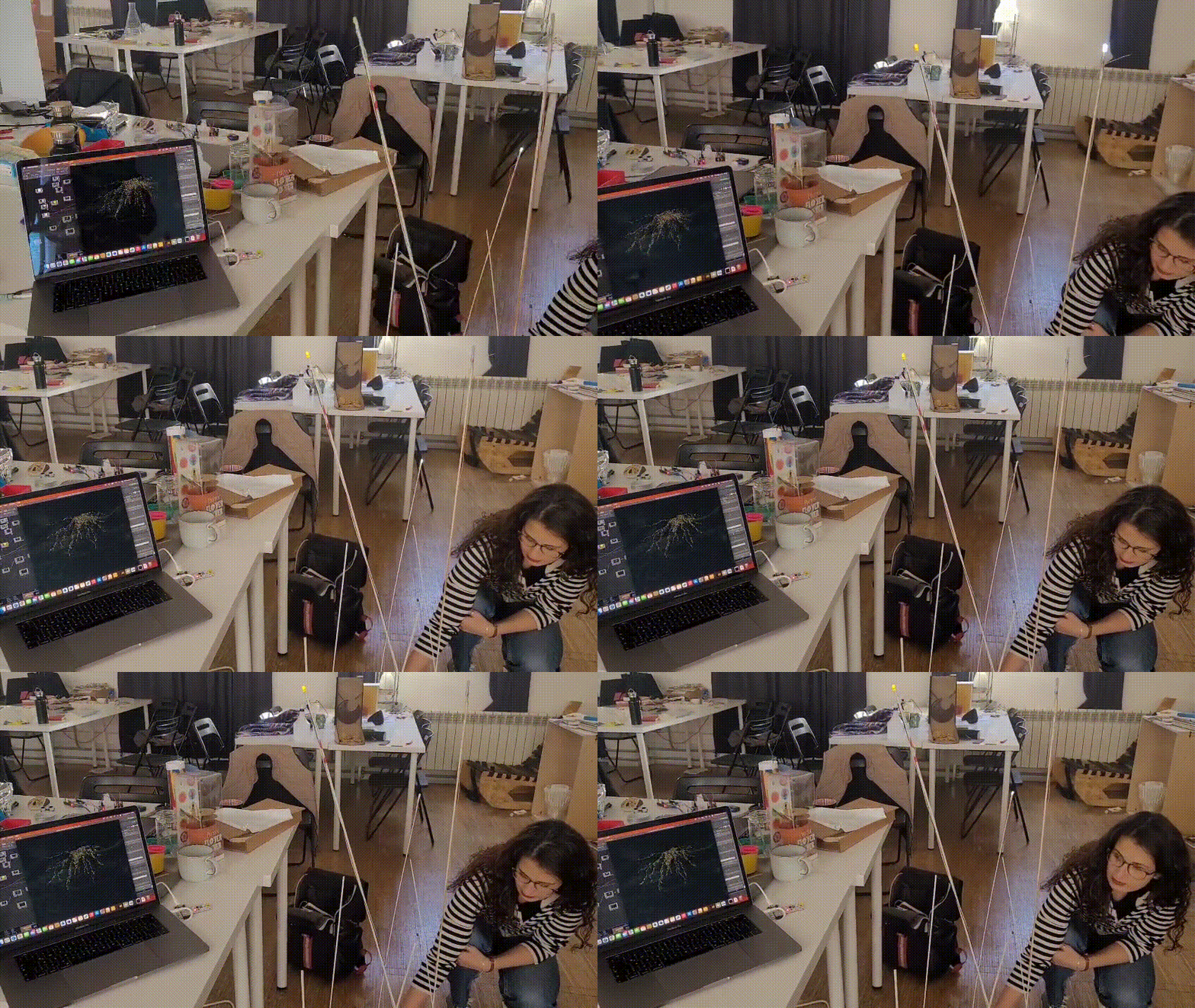
The result was a magical experience that used storytelling, electronics and technology to elicit a sensory experience of connecting to the Earth. Surely enough, we did come back to the idea of the fireflies, which was a full circle moment, especially considering all of the challenges we encountered along the way with the conceptualization.
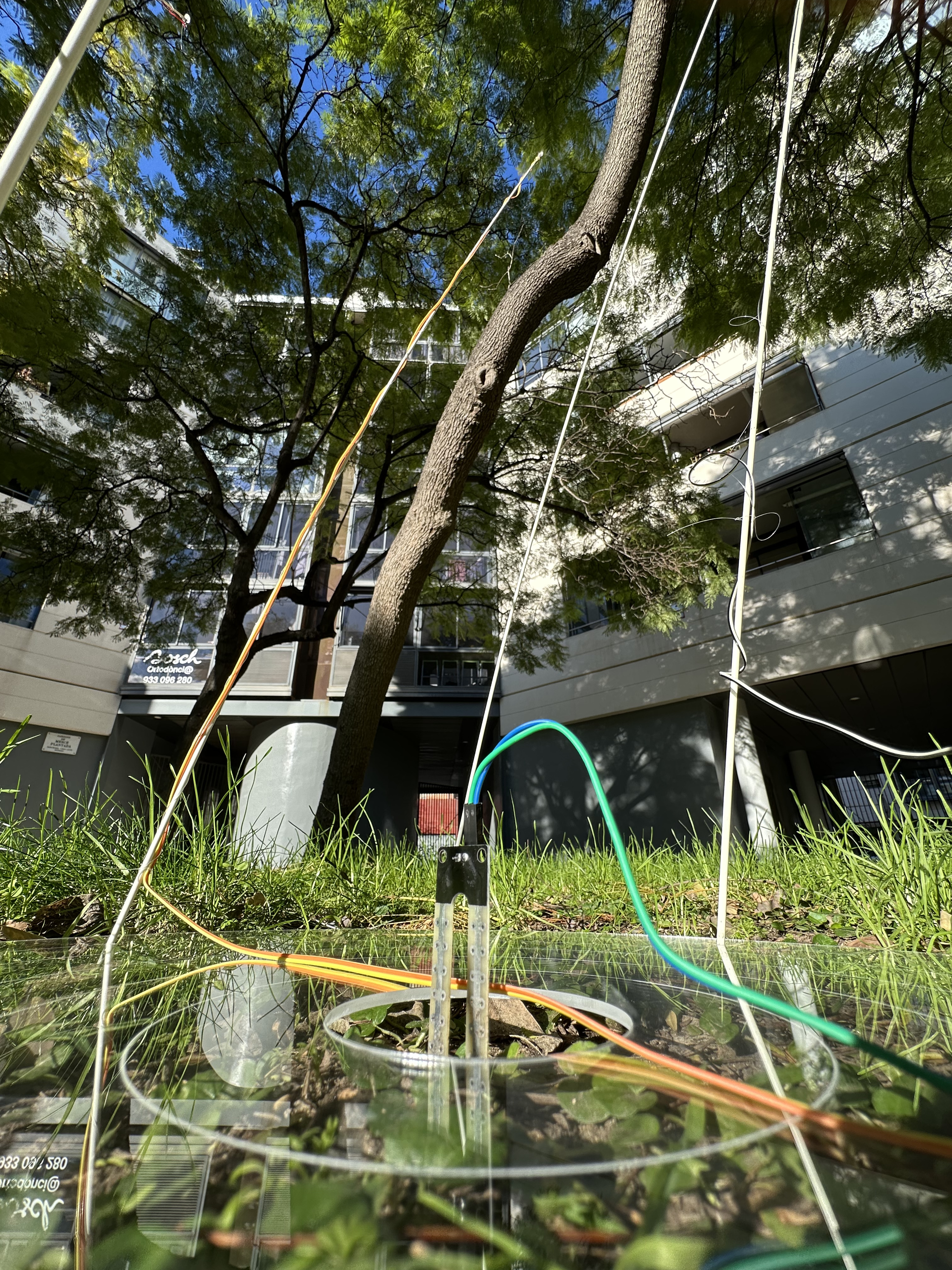
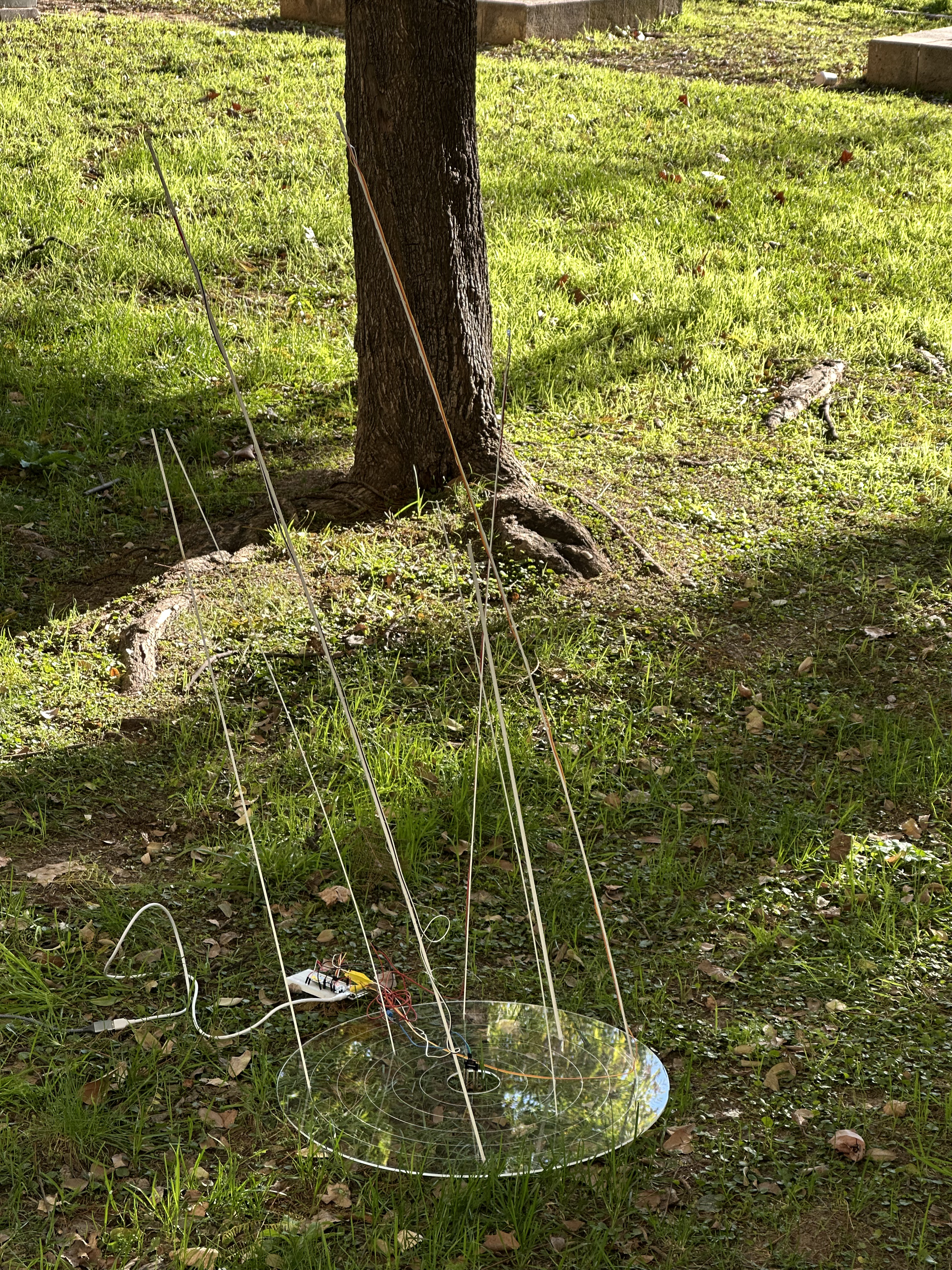
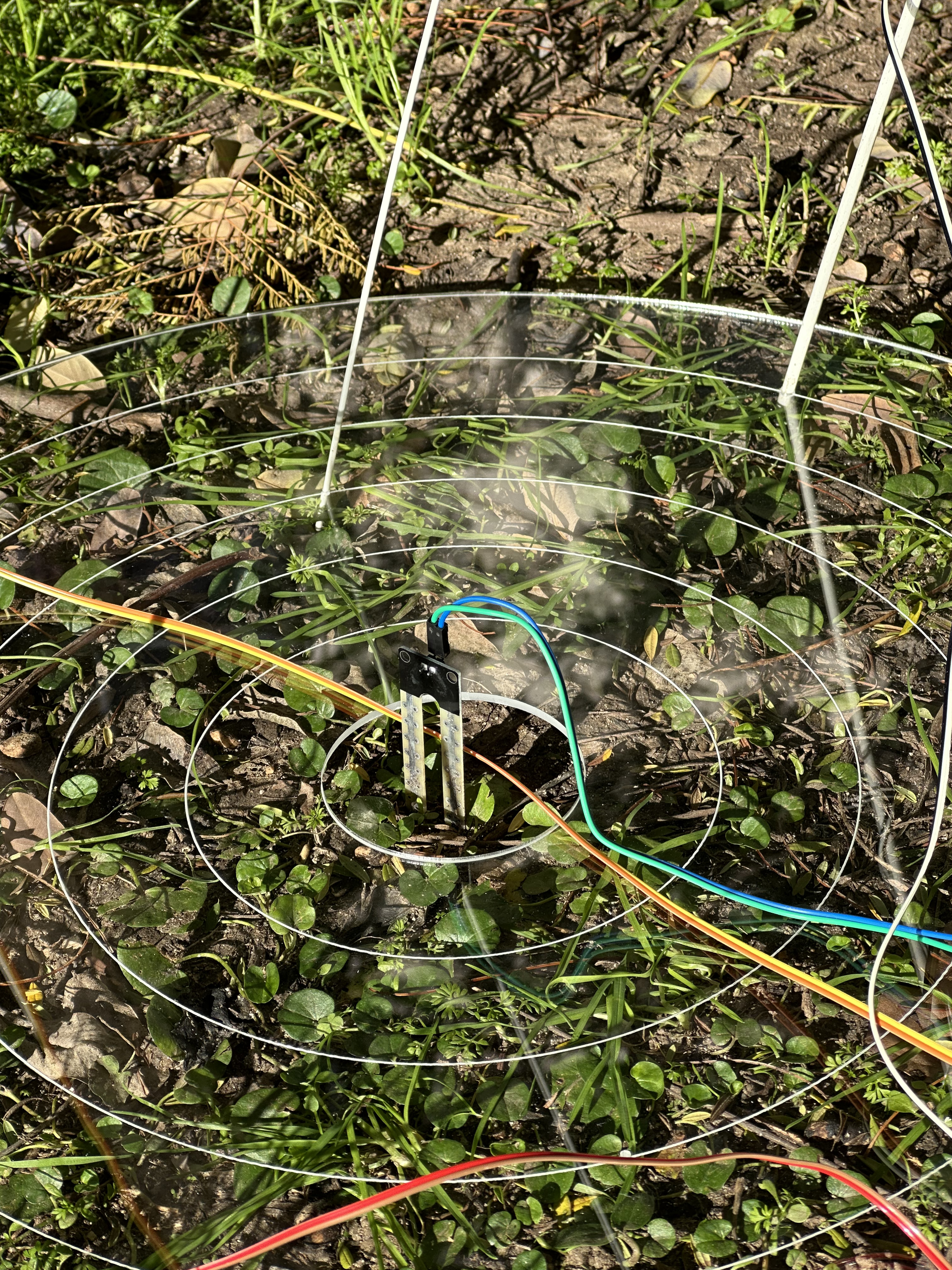
Although I am satisfied with the simplicity and effectivity of the artifact, future iteration ideas include integrating a physical housing to encase the brain: the barduino, wires and connections. Additionally, improving the LED connections to ensure they are well secured to the board is another priority. To elicit more immediate reactions in the device and integrate an additional influence to the output, the addition of proximity or movement sensors would be nice to add another layer of input to the device and allow for a more human-interactive intervention.
“Seeding Memories”
What if you could whisper your secrets to a tree that promises to store it forever in the depths of it’s heart in a language no one else understands? What if you could go back to hear it whisper it back to you again?
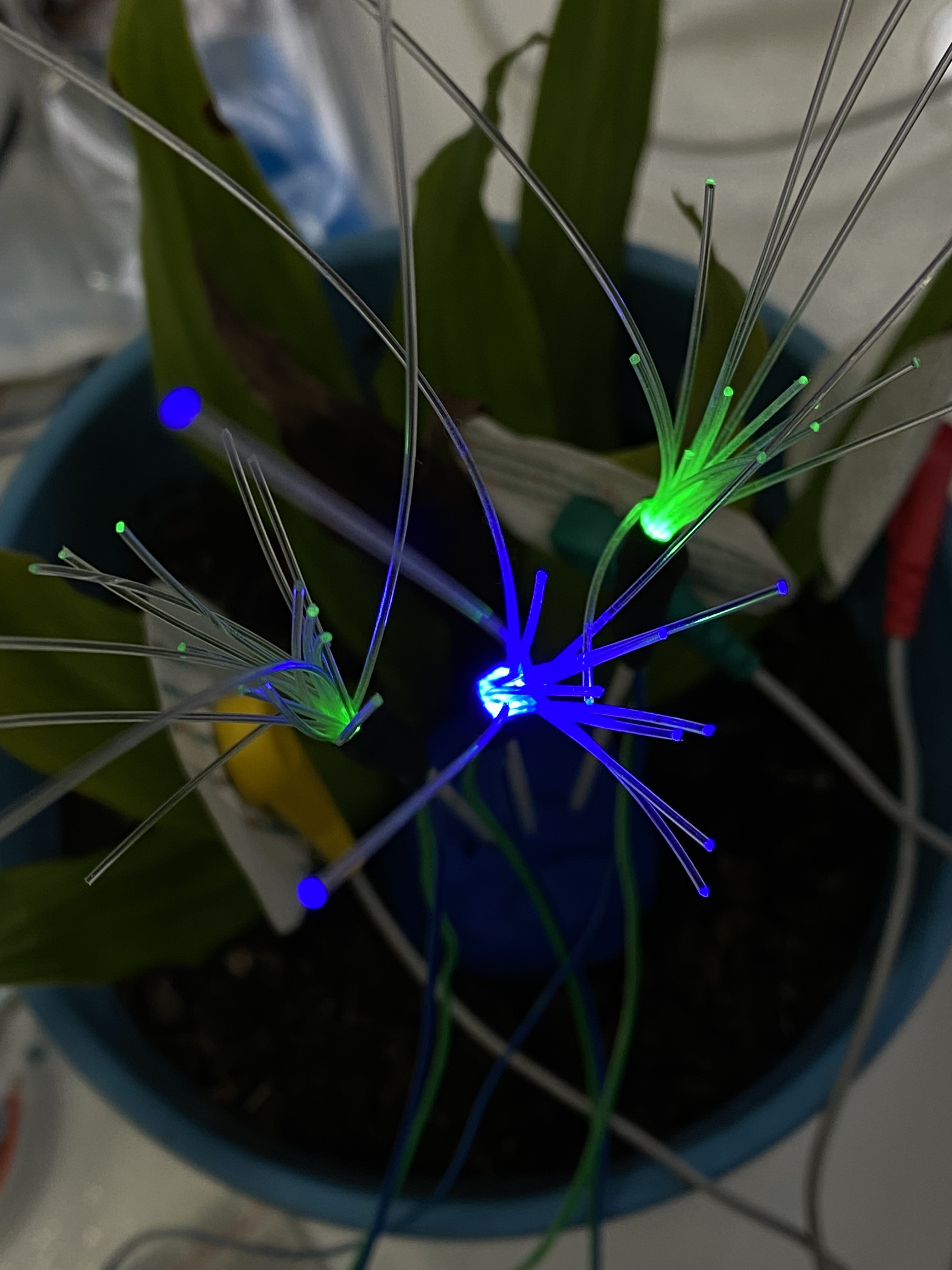
Building off of the ongoing desire to restore a more meaningful relationship with Earth, “Seeding Memories” is a secret memory encrypting system that merges real-time human audio with the living pulses of a tree, forming a private memory archive in the tree - the ecological equivalent of the cloud.
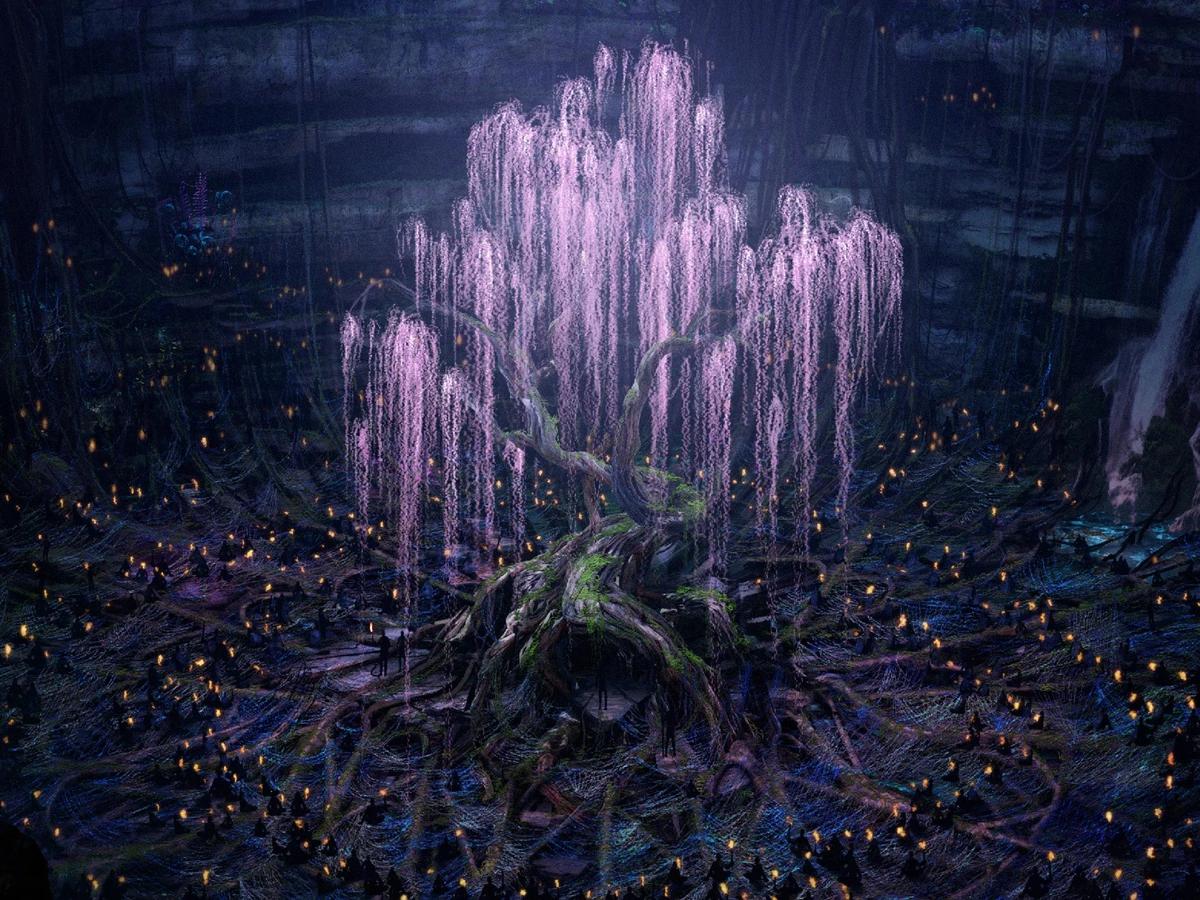
Inspired by the Guardian ‘Tree of Souls’ in Avatar as a space for storing community memory, the intention was to store personal data through encryption to form a secret communication between tree and human, creating an intimacy between the two different intelligences.
Process, Evolution & Traces
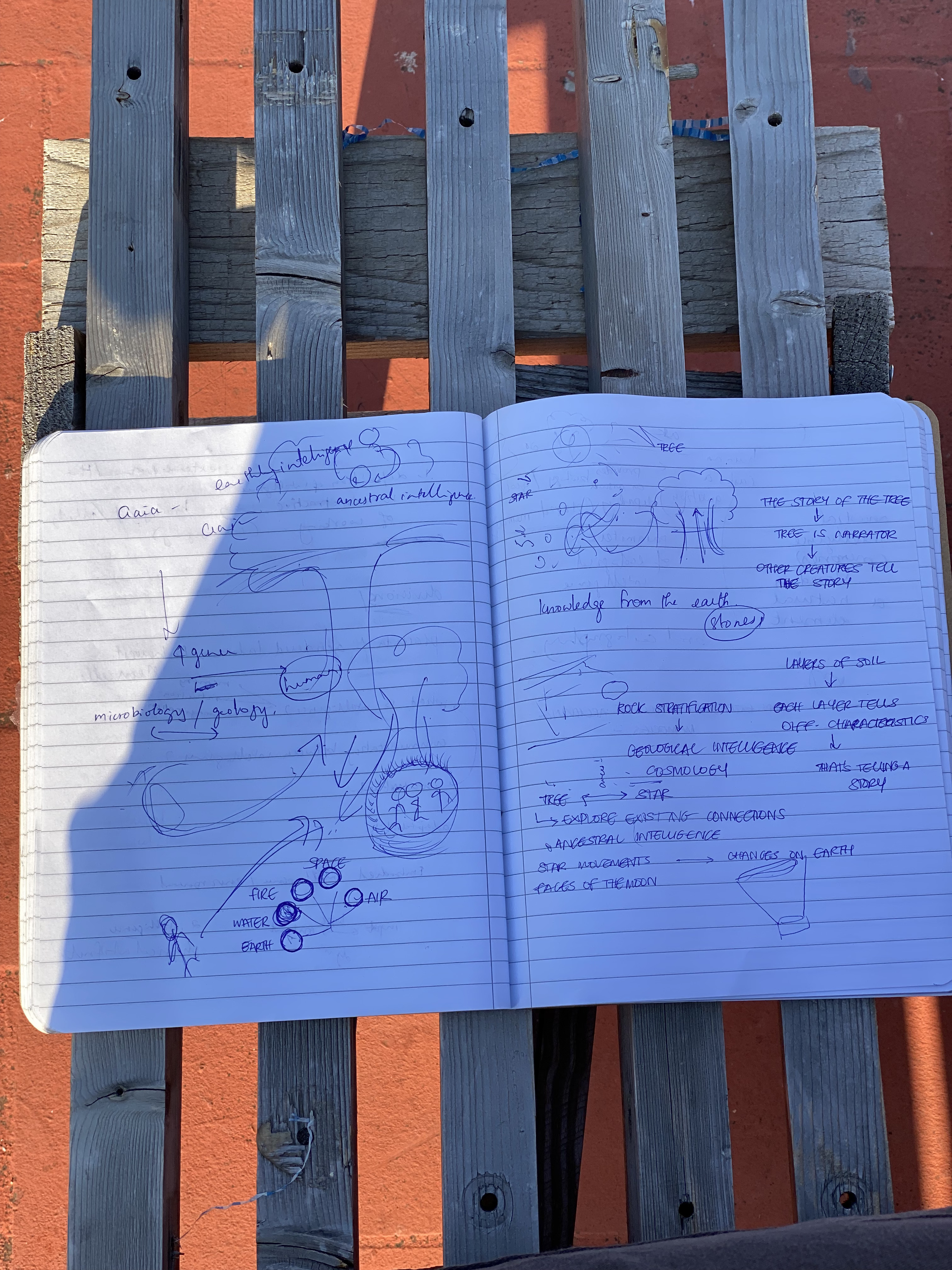
Since we already did the exercise of mapping our individual interests in the previous edition, this time we jumped straight into identifying the overlap we wanted to focus on. Individually, we were exploring multi-scalar scars, connection to earth, and the invisible underground. While brainstorming, we discussed ideas of earthly intelligence, ancestral intelligence and ecological intelligence. One particular point that interested us was how historically over time, ecological landscapes are known to have preserved and communicated the stories of ancestors that inhabited the space before. Collectively, we aligned on using natural elements to store memories and respond back. After a back and forth discussion, the tree felt like the right choice to build off of the previous exploration and also because of its alleged wisdom.
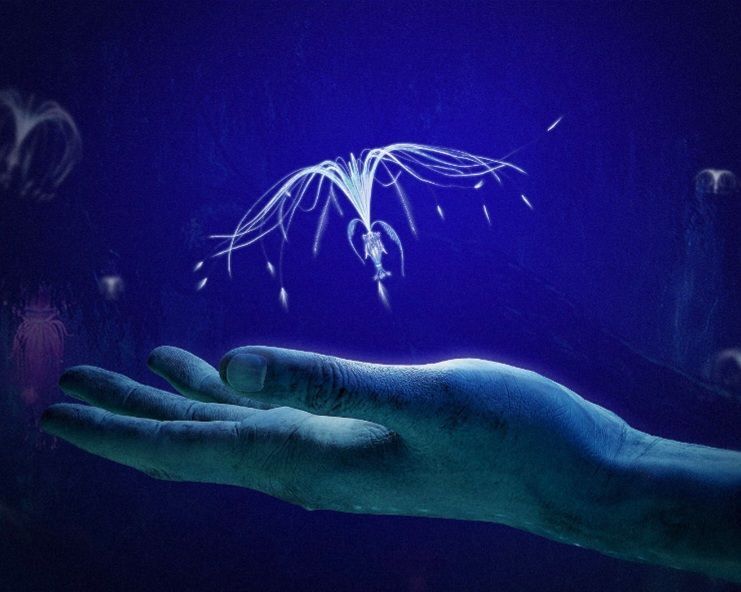
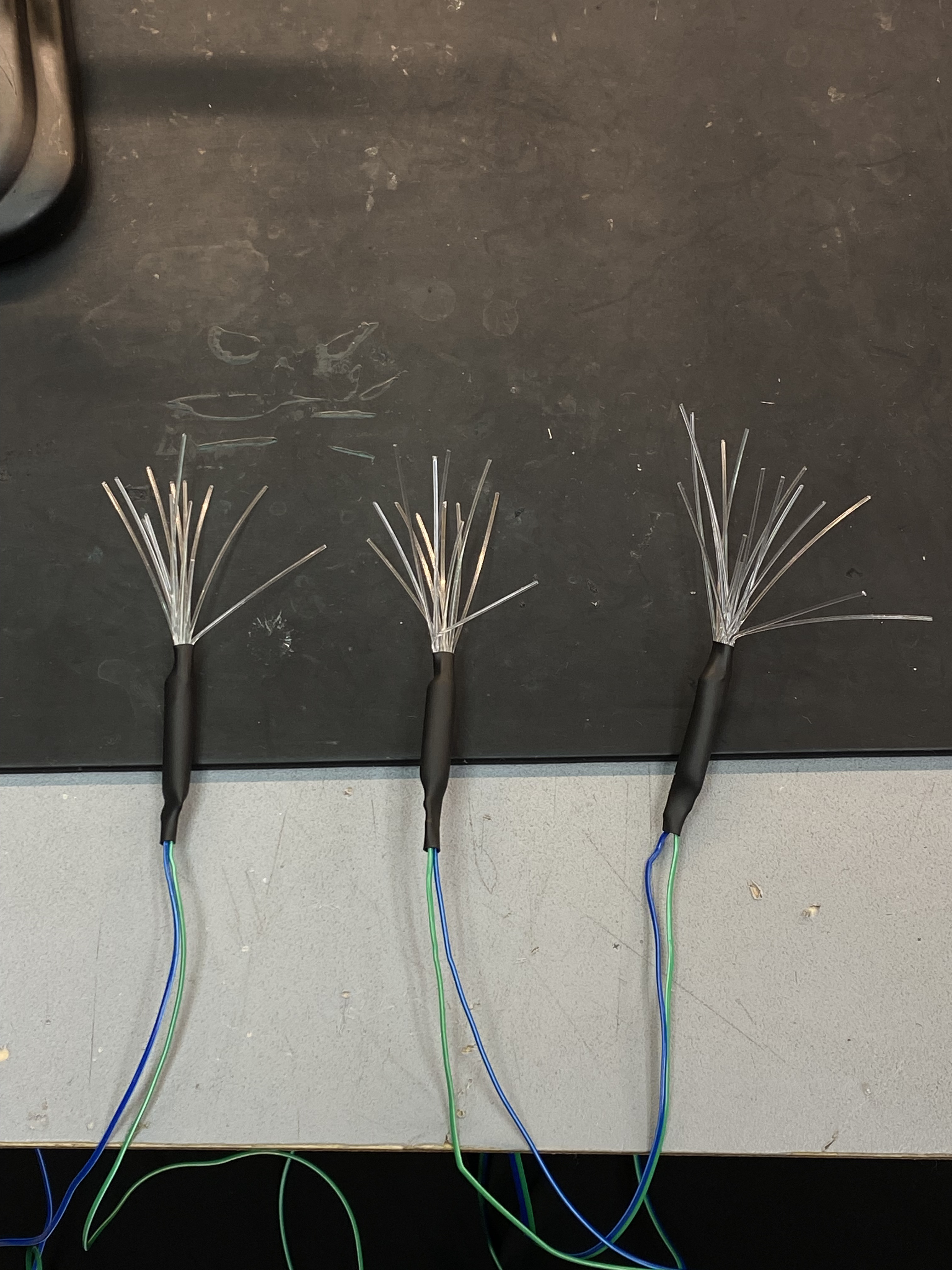
When thinking about the physical form and shape of the artifact, we opted for something that resembles the seeds of the avatar tree. Throughout the days and design process, we kept finding tree seeds appear magically in front of us. It felt like some sign from the universe to push forward with this as a visualization of the artifact. To achieve the visual effect from the image of the thin strings of light, we used fiber optic cables that connected to the LED lights, which may be one of the only things we did not have any technical issues with during the developmental process. Black thermal shrinkable sealing boot was used to cover the LED and amplify the light to the cables.
There were a lot of technical resistances and push backs throughout the process that forced us to change path or learn to push back. Cognitive, Moral, Technical. Every trace taught us something.
- The EMG sensor - although we did end up sticking with this sensor till the end and did not change it, maybe we should have. It took Swarna a lot of back and forth, with the help of Mikel, to get it calibrated to get readings that made sense. What’s interesting is that the sensor is very sensitive and it detects micro-voltaic changes. Any loose contact affected the readings drastically. Not only that, but we realized that having the laptop connected to power for charging also affected the sensor reading data, making the sensor weaker. Even though we discussed changing the sensor, we didn’t end up doing it because we wanted to see this one through to the end - a moral decision. In retrospect, we easily could have tested using another sensor.
- Sensor reading plant - since the EMG muscle sensor is intended to be used on humans to detect microvolts from human muscle contraption, the readings it takes from a static plant varies significantly, let alone from a tree. We had to be mindful of this while taking readings from the plant and adjust our expectations accordingly - a mental shift that took us a while to accept.
- Amplifier - this was one of the biggest frustrations we had. The idea was that the DF player robot would use the SD card to store the incoming audios, serving as the database for the data, enabling future access and decryption. It didn’t work. Despite several hours and different consultations from Mikel and Adai, the DFplayer was not connecting to the Barduino. We thought maybe something was wrong with that particular DFplayer so we tested two more, three in total. Not one of them worked. A pivot was in order. We decided it was time to let go and find an alternative means. That included the speaker was testing in parallel.
- Program - As a result of the struggle with the DFplayer, we decided to switch programs as well, from Python to TouchDesigner, since TouchDesigner had an embedded option to record data within the program. After we had already modified the live audio data coming in from the headset to a distorted audio using a python code, this also forced us to start over with the coding, hacking and setup of the audio input + output that Beste had already established in Python. However, it was not the only reason for the program switch. When connecting the sensor data to Python, it was stiffer to play with the audio, hence why we decided to switch to TouchDesigner, which has more flexibility in that sense. From Python to TouchDesigner and from speaker to headset. We were forced to change and adapt once again.
I appreciate that as a team, we were able to recognize when too much time was being spent trying to hack something and consciously decide when to stop fighting the resistances. We give it our best shot and move on. Acknowledge, Decide, Pivot.
Moving Forward
I don’t see this as the end for “Seeding Memories”. In its current state, it evokes an emotional response at the mere thought of the intimate connection being shared with the tree. Despite the multitude of technical limitations we experienced this time around, from restrictions on microphones and speakers to data storage and sensor outputs, the conceptual backing is powerful. With all the right inputs, it has the potential to become a mobile tool for communicating with ecological intelligence. One of the key points of the design that we didn’t have the time to finalize but would love to bring to reality, was the technical means of storage. We did not set up the system for storing the original input audios of the shared human memory. However, one of the main purposes of the tree as the ‘cloud’ is to hold the secret memories for access at any time in the future after the interaction for decryption. This is for when you decide to return and hear the tree whisper your memory back to you.
CCL Badge